
Horses usually specialise in one or the other; while flat racing features finely built, elegant horses made for speed, jump racing requires a different skill set entirely, one which we will take a deeper look at below. There are two main types of jump race – hurdles and chase. All jump racing is also known as National Hunt racing in the UK.
Hurdling
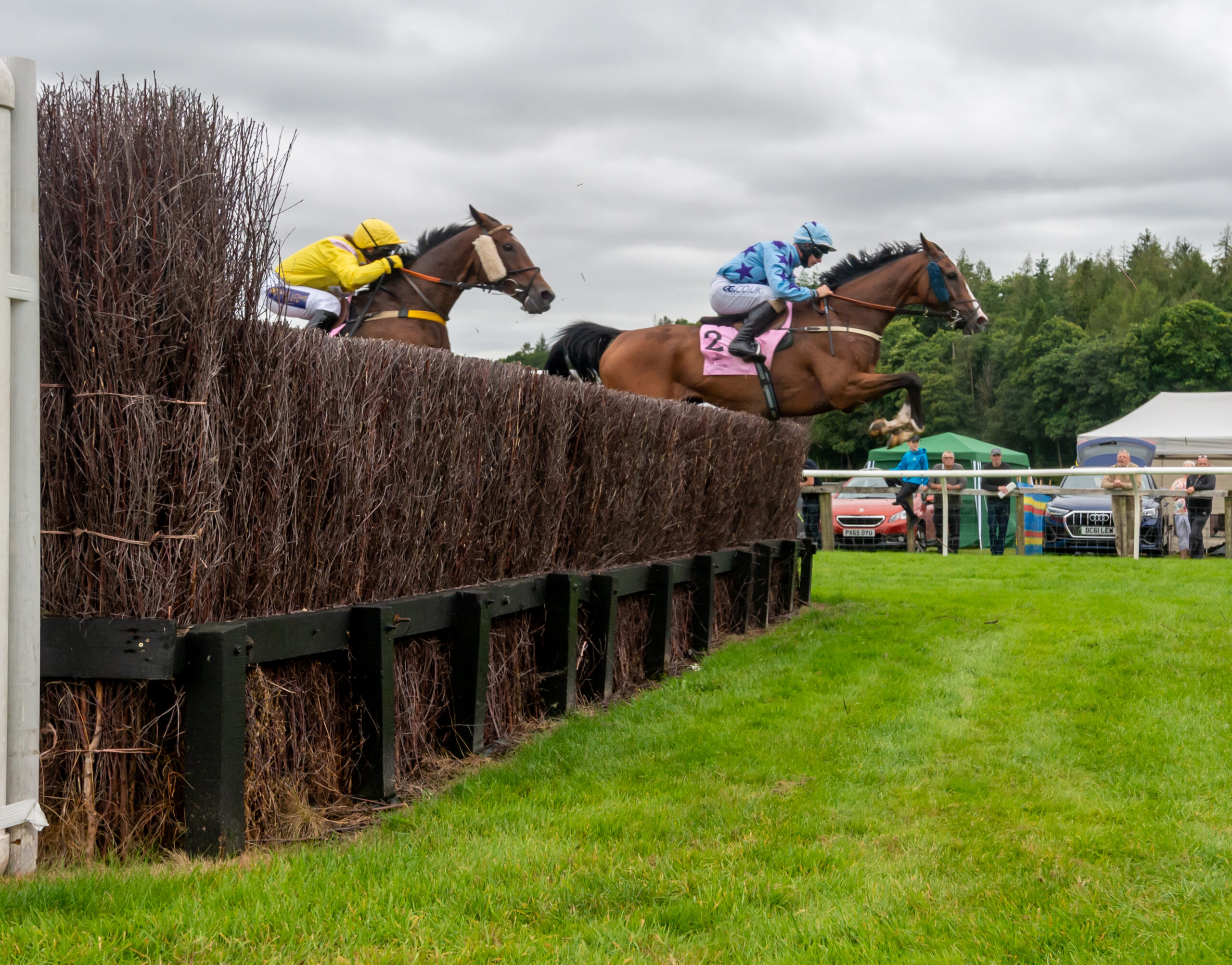
Hurdles are a minimum of 3 ½ feet high, whereas the fences in a chase are a minimum of 4 ½ feet high. Moreover our hurdles are made of foam and are designed to flex more, and are built so that if horses clip the top section of the barrier they are unlikely to fall or injure themselves. This means that hurdling is more suitable for young or beginner horses – it’s a more forgiving discipline. Here at Cartmel we have four sets of Hurdles, two on the woodside and two on the priory side.
Steeplechase, or chase for short, requires horses to jump over sturdy, tall fences. Moreover, there are usually other obstacles such as ditches as part of the course too. Here at Cartmel we have one open ditch and one water jump. This makes for a demanding and exciting race, requiring substantial technique and bravery from both horse and jockey. As such, this is usually run by older horses and more experienced jockeys, ensuring that each understands the exacting requirements. Moreover, technique in these races is more important than raw speed, meaning that many flat horses make the move to National Hunt as they age.
Some see this racing as more exciting to watch, and more challenging to compete in given the risk involved. Certainly steeplechase is a pulsating contest for both participant and spectator, with some incredible athleticism on display. It is the most stamina intensive style of racing and horses are pushed to the absolute maximum.
National Hunt Flat races
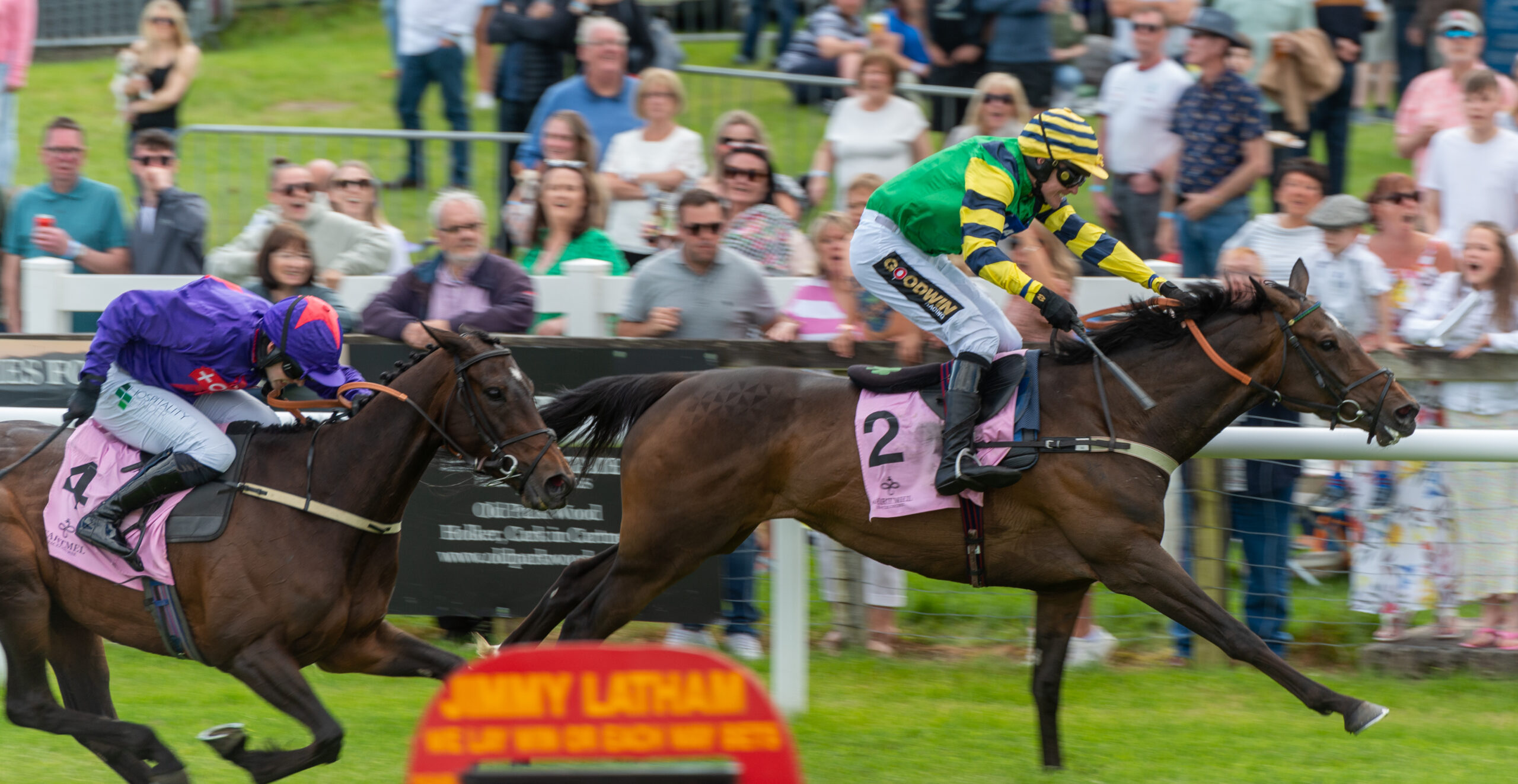
While this may seem like an oxymoron, it makes much more sense when you understand the reasons for this type of racing to exist. These are flat races for horses bred for jump racing. No obstacles are jumped and the races are seen as a building block to a future career over hurdles or fences.
These are also known as Bumpers. The purpose is to break young horses in before they race over Hurdles. Experiencing the track and all that comes with it gives them experience without the additional test of difficult obstacles. Many national hunt horses gain their first race course experience in these races, before moving onto obstacles.
Fun fact: the nickname “bumper” is tongue-in-cheek, coming from the riding style of their jockeys. Being inexperienced horses, the jockey’s expertise usually matches, meaning they “bump” and bounce around in the saddle.
Seasons
Flat and jump races have seasons throughout the year. Flat races usually take place in the warmer summer months, between April and October. Hurdle and Chase races usually take up the other part of the year, between October and April. This is partly due to tradition and partly due to conditions, as the heavier going in winter is better suited to jump racing, and the quicker, harder ground in summer is preferable for the flat, but here at Cartmel we are a Summer Jumps track.

Things to note
- There are strict rules in place regarding obstacles for National Hunt racing. Plain fences have to come in at 1.37m and water jumps are to be a minimum of 0.91m. Open ditches include a ditch on the angle of approach, making them a more difficult obstacle. This is to standardise courses as much as possible, as well as mitigating risk for both horse and jockey.
- Prize money for the winter season is considerably less than the flat, although a National Hunt horse’s career is likely to last far longer, as horses tend to get better and not worse as they age. Some of the most famous races in the world are steeplechases and they are hugely popular with racegoers and gamblers alike.
- Chase is the oldest style of horse racing recorded, first recorded in Ireland in the 18th century, with potential roots in Ancient Greece. It is named for jockeys racing from church to church (or steeple to steeple) over obstacles that stood in their way – hedges, fences, walls, ditches etc.
- While hurdles are more forgiving than fences, there is still a focus on technique and substantial accuracy is still required of both horse and jockey.
- While flat horses tend to peak at around 3-5 years old, it is not uncommon for National Hunt horses to be over 10 years of age. These horses generally live to an age of between 18 and 25 years.
- Did you know that Cartmel boasts the longest run in the country, from the last chase fence to the finish line.
- While Thoroughbreds are used for both types of racing, half-bred horses can also be used for jumps.
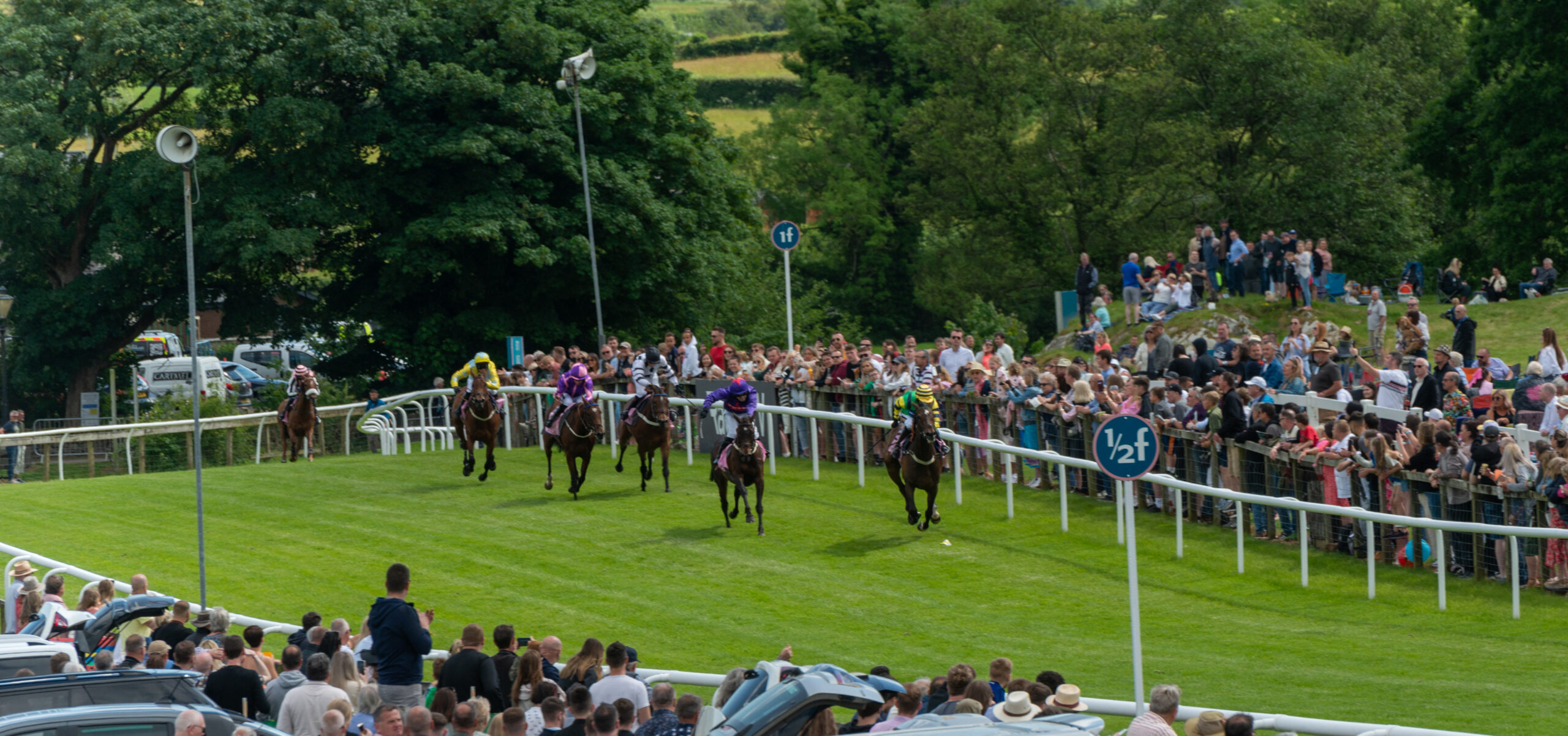
Despite the difficulty and the risk involved in jump racing, many racegoers would declare that it makes for the best race. The skill, bravery, technique and adrenaline of both horse and rider makes for a stunning spectacle.
When you see a hurdle race, which is thrilling in its own right, be aware you may be seeing next year’s steeplechase specialists as they gain valuable experience.